

How In-Person "Trader" Scams Work
In-person trader scams typically involve someone approaching you with a compelling offer or service that seems urgent or limited. Here’s how they operate:
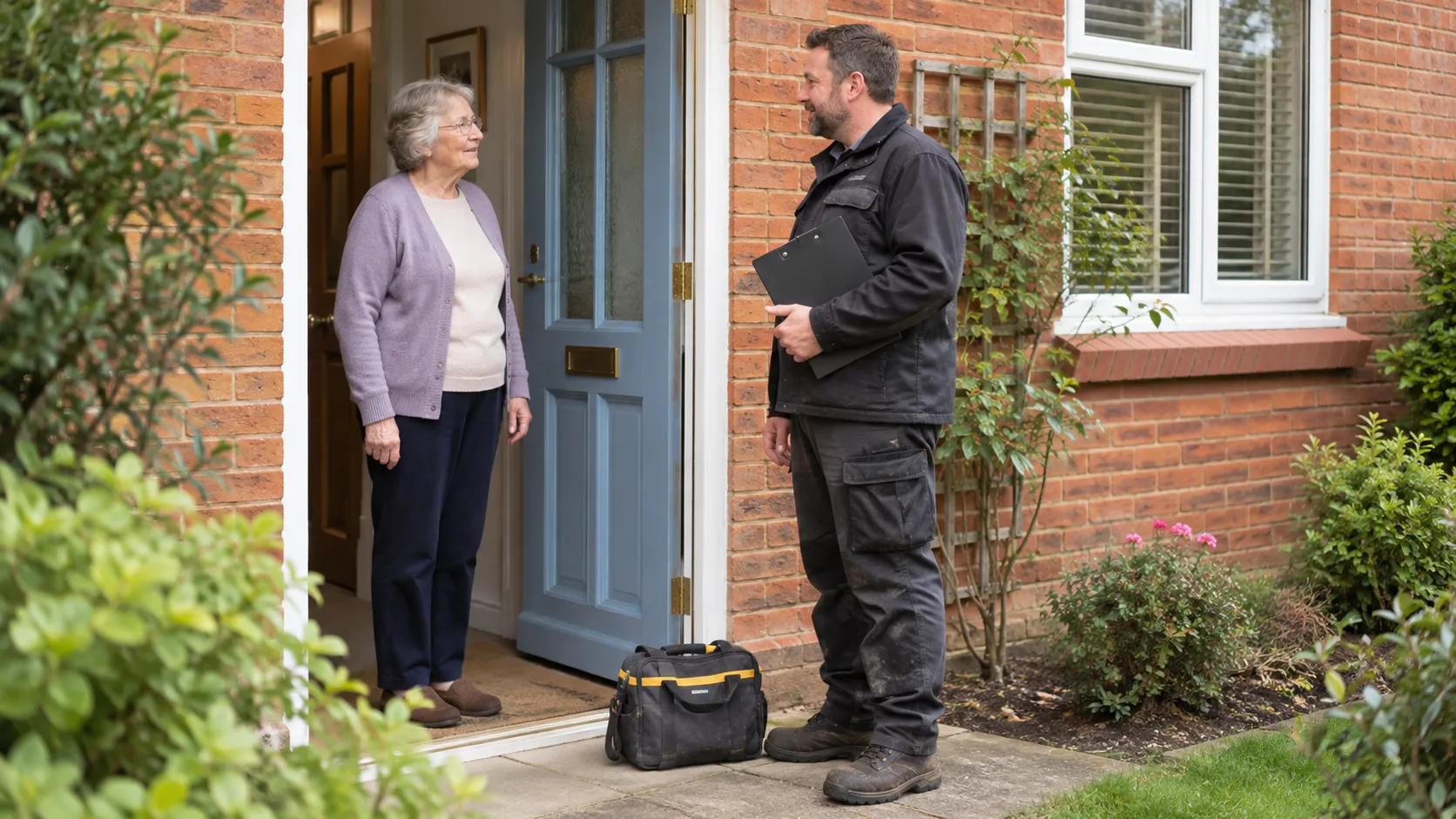
- Door-to-Door Sales: Scammers knock on doors, offering services like gutter cleaning, driveway paving, or roof repairs, demanding upfront payments.
- Fake Repair Services: Fraudsters may approach in public places, offering quick fixes, like dent repair or home appliance checks, claiming there’s an urgent issue that needs attention.
- Cheap Goods or Services: They offer discounted goods or claim to have high-quality items they “just happen” to have with them, pressuring you to buy immediately.
- Pressure to Pay Cash: They often ask for cash payments and use high-pressure tactics to close the deal on the spot, claiming the offer is temporary or “special.”
Once payment is made, these scammers might deliver low-quality work, vanish with the payment, or pressure you further for additional costs.
Why Do People Fall for In-Person "Trader" Scams?
People fall for in-person trader scams because these scammers create a sense of urgency and familiarity. By showing up in person, they present themselves as knowledgeable and trustworthy, appearing as if they’re only there to help. Many scammers target elderly people or homeowners, who might feel compelled to act on these urgent offers to avoid potential issues, especially if the trader seems polite or professional. The in-person approach makes the scam feel legitimate, reducing suspicion.
The Mindset Behind In-Person "Trader" Scams
These scams rely on manipulating trust and exploiting the “personal touch” of face-to-face interactions. Scammers use friendliness, urgency, and a sense of expertise to win over their victims. Often, they also use tactics like showing pictures of previous “work” or wearing uniforms to appear legitimate. By creating a sense of scarcity or fear of future issues, they nudge people to act on impulse, making quick payments or decisions without verifying the trader’s background or legitimacy.